

The urgency of addressing fossil fuel phase-out has reached a critical point. What was once narrowly framed as an environmental challenge is now understood as a systemic crisis affecting everything from geopolitics to public health.
Against this backdrop, new spaces are emerging to rethink how international cooperation can accelerate a just and equitable transition away from fossil fuels.
In Santa Marta on April 24 – 29, Colombia and the Netherlands are co-hosting the First Conference on Transitioning Away from Fossil Fuels (TAFF). Designed to serve as a “safe harbor” for both state and non-governmental actors, this conference represents an effort to reset and accelerate international action on fossil fuel phase-out at national and global levels.
In the lead-up to TAFF, a pre-consultation was held at The Hague Humanity Hub on April 14 to center justice, equity, and international solidarity within this agenda. The event brought together a diverse group of participants from civil society, science, politics, and youth groups, to explore how the ambition to phase-out fossil fuels can be translated into practical, just, and inclusive pathways.

Key Takeaways
• Ending fossil fuel dependence is as much a health and justice imperative as it is a climate necessity
• Political will, not scientific uncertainty, is the primary barrier to meaningful progress
• Existing multilateral processes are too slow or limited, prompting complementary more ambitious coalitions willing to act faster
• A just transition requires inclusive participation, particularly from historically excluded communities
• Participants emphasized the role of the Dutch government within this broader system, encouraging the Dutch to take a more proactive stance, building coalitions of ambitious actors, strengthening international collaboration, and positioning itself as a frontrunner in the just transition.
Fossil Fuels as a Cross-Cutting Crisis
The conversation began with a keynote address by Professor Elisa Morgera, UN Special Rapporteur of Climate Change and Human Rights, who stressed that fossil fuels are not just an environmental concern but a root cause of interconnected crises including health, food, the economy and geopolitics. She zoomed in on the impacts, emphasizing that they are not confined to planetary systems but also manifest within human bodies, underscoring the urgency of systemic change.
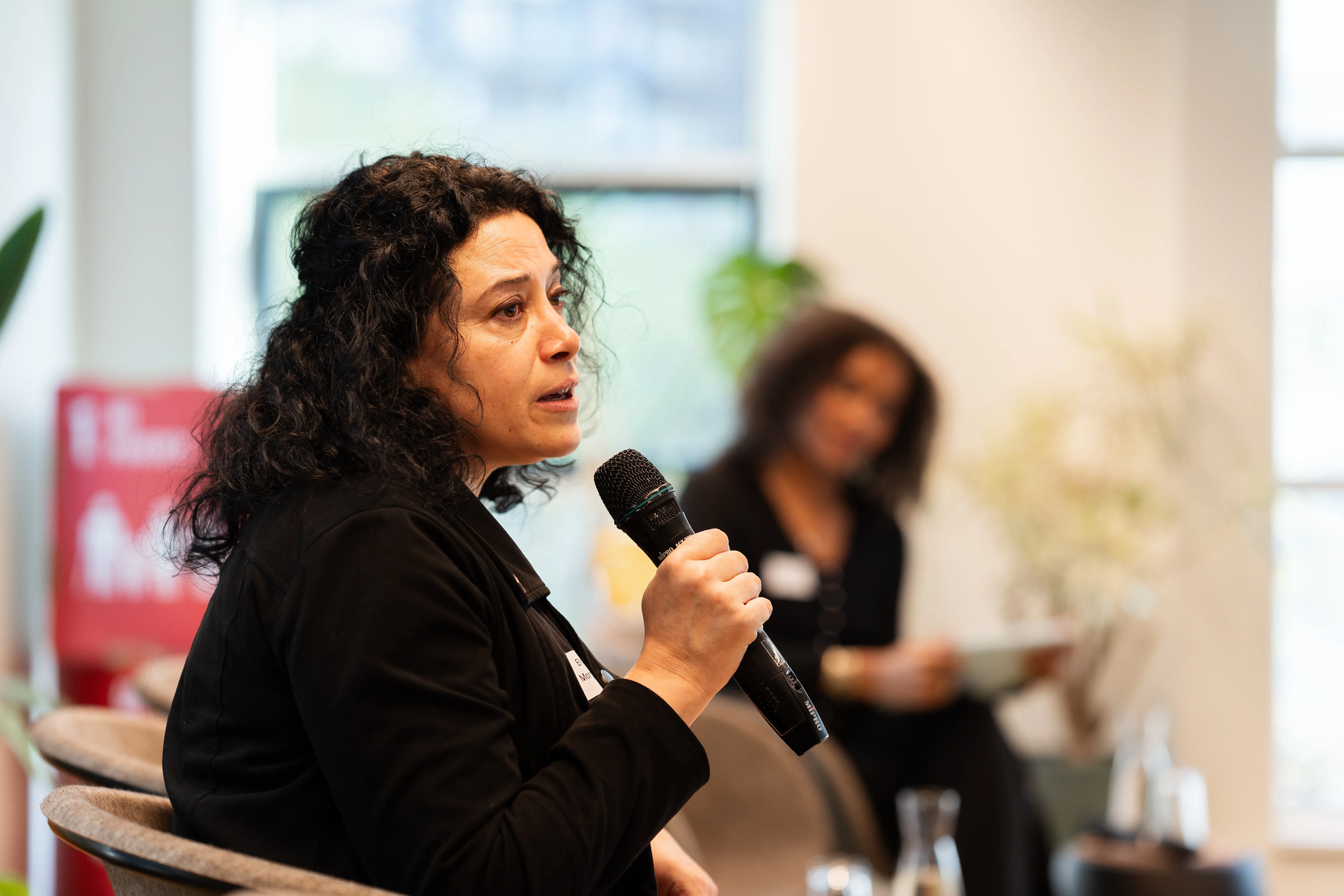
“Our bodies are reflecting the harm that is being done to the planet at the same time.” — Prof. Elisa Morgera, UN Special Rapporteur of Climate Change and Human Rights
Prof. Elisa Morgera calls for breaking down silos between sectors, uniting climate, health, and social justice movements to push for transformation. She urges bottom-up action that is inclusive and ensures all perspectives are heard. According to her, “if it’s not a just transition, it’s not a real transition”.
Power, Politics, and the Transition Barrier
During the panel discussion, a recurring theme was the imbalance of power between fossil fuel interests and a broader society. According to Kumi Naidoo, President of The Fossil Fuel Non-Proliferation Treaty Initiative, “We need to consciously acknowledge the extreme power imbalance between the fossil fuel industry versus the collective capability of the rest of us.”
Participants pointed to fossil fuel lobbying, subsidies, and entrenched economic dependencies as key obstacles. Sjoukje van Oosterhout, a Member of Parliament from PRO, noted that The Netherlands remains a fossil fuel economy and argued that the current coalition agreement does little to accelerate a meaningful transition away from this dependence.
This sent out a clear message: the issue is no longer a lack of knowledge, but a lack of political courage and accountability.
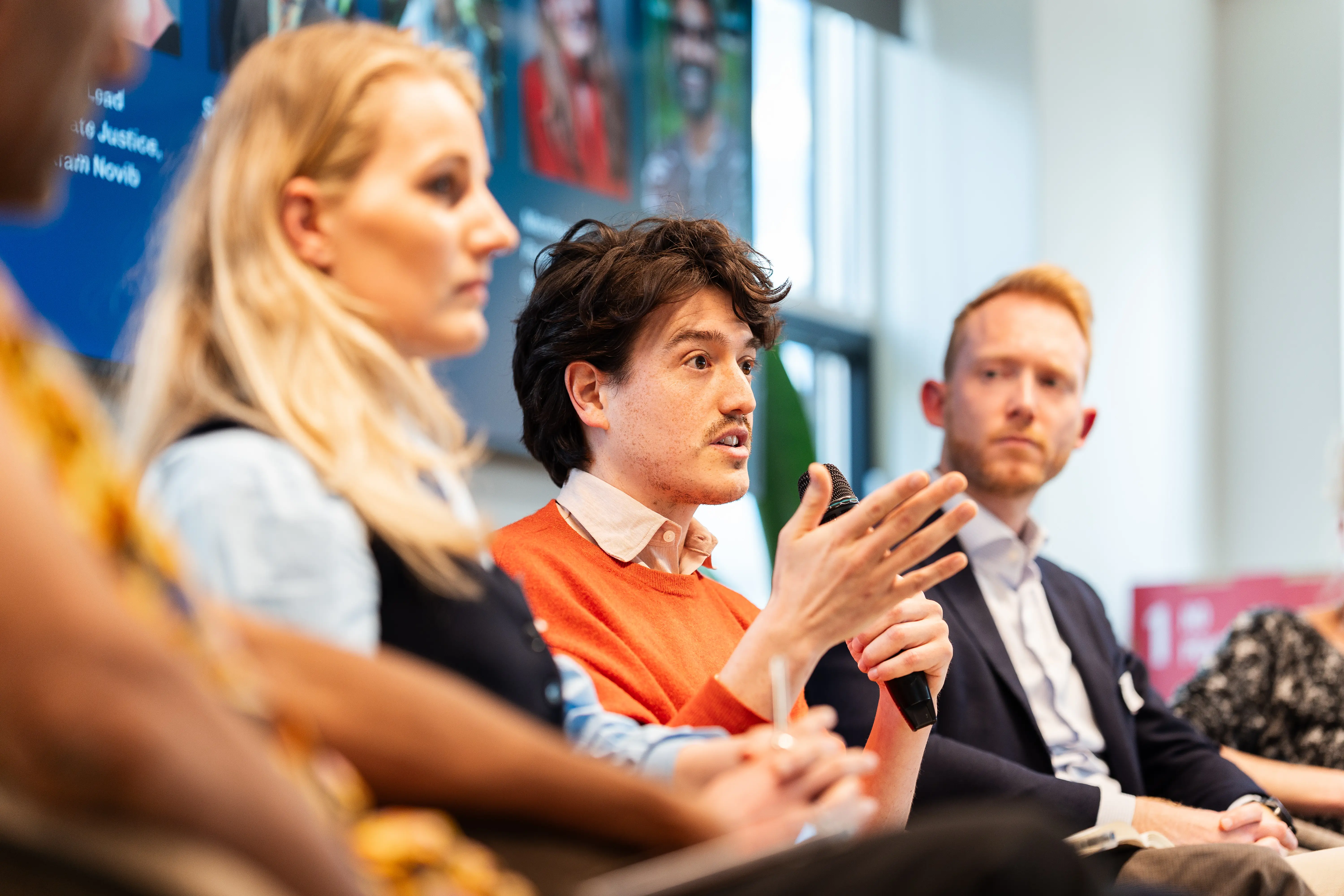
“We don’t need more science. We need to act on what we already know.”
— Adrián Estrada, Advisor for The Netherlands Scientific Climate Council
Kumi Naidoo also calls to acknowledge global inequalities, particularly the challenge faced by countries in the Global South balancing climate action with economic pressures like debt.
A credible transition must also be grounded in the meaningful inclusion of historically excluded communities. During the breakout session “Just Transition for Whom? Designing an Inclusive Fossil-Free Future”, participants explored what a just transition would mean for different groups by stepping into the perspectives of minorities, women, youth, blue-collar workers, and Indigenous Peoples. The discussion focused on identifying their specific needs and how these can be addressed in practice.
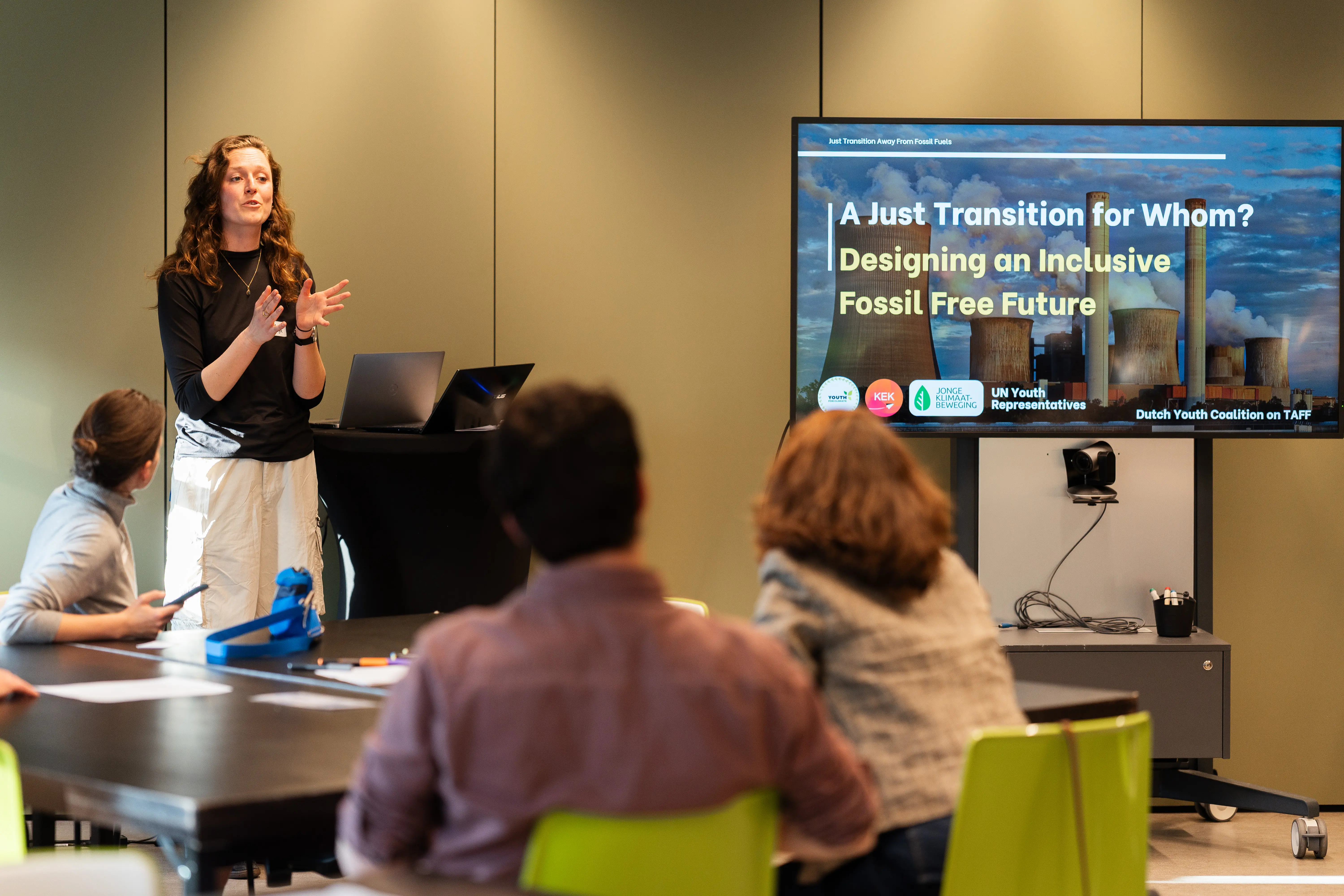
The session highlighted that the transition presents significant opportunities for local development, but that much more is needed to ensure inclusivity. Key priorities include reskilling and upskilling youth and women to strengthen economic independence and promote greater diversity in the workforce.
In another breakout session, “Reforming Investment Law for a Just Fossil Fuel Phase-Out”, participants examined how current international investment law, especially Investor-State Dispute Settlement (ISDS), protects fossil fuel companies and obstructs climate action. The main issue identified was that ISDS protections allow fossil fuel companies to sue governments when climate policies threaten their profits. As a result, participants argued that the system is outdated and incompatible with a just transition away from fossil fuels.
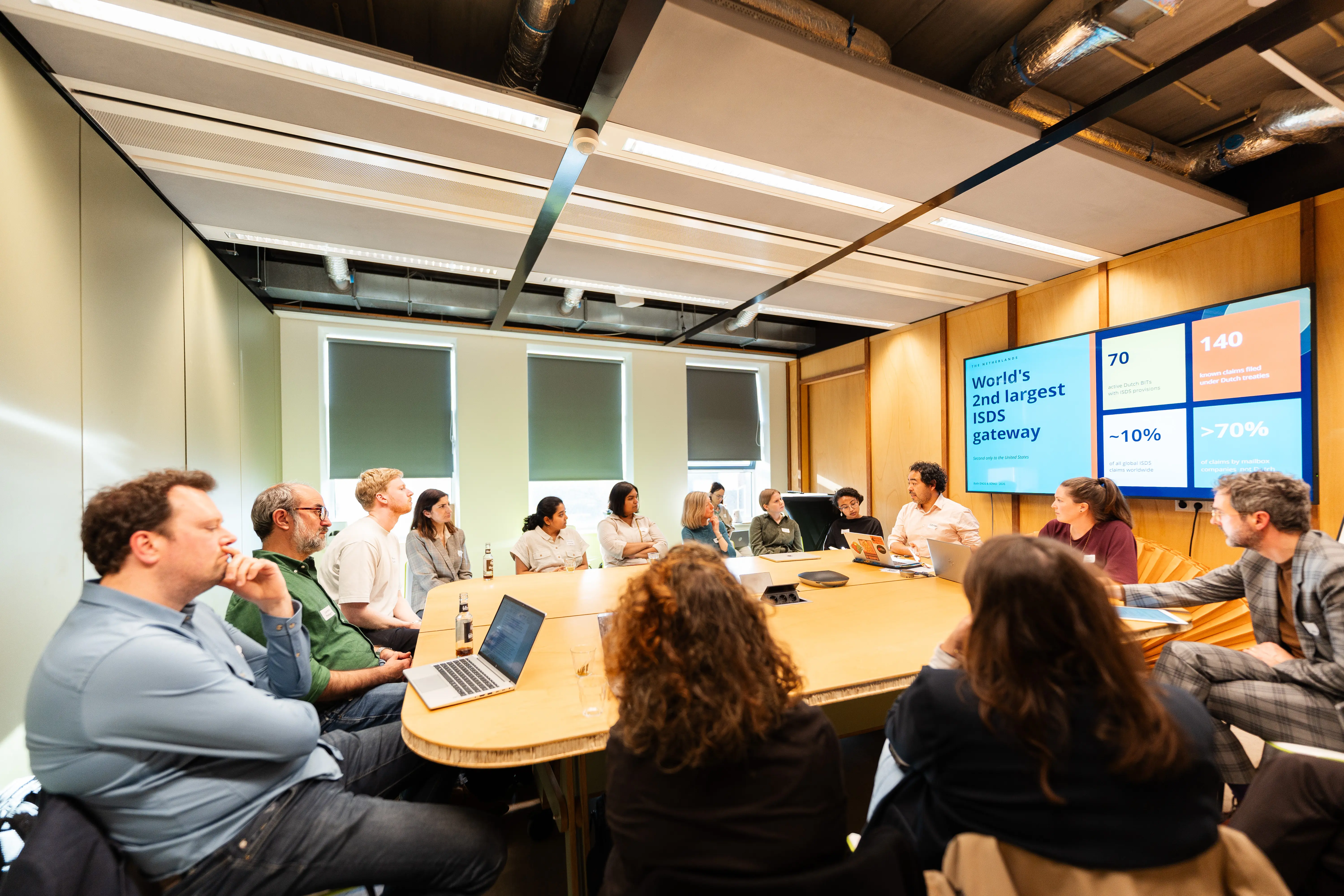
The Netherlands was identified as a key architect and promoter of the current system, with extensive treaty networks, especially affecting the Global South. As such, the Dutch government was urged to take a leading role in dismantling and reforming the system it helped create.
The upcoming conference in Santa Marta is seen as a critical moment to develop a coordinated, multilateral instrument for investment law reform, requiring collective state action across governance levels. Additionally, it presents an opportunity to recognize that investment reform needs to intersect with climate, human rights, and social justice.
Rethinking Multilateralism: From Negotiation to Action
There was a strong consensus that traditional global processes, like the Conference of the Parties (COP), have not delivered the speed or specificity required. While progress has been made, it remains insufficient to meet current challenges.
In light of this, the TAFF conference in Santa Marta was framed not as a replacement, but as a necessary complementary space where coalitions can test more ambitious, time-bound commitments. Ferdi Klaver, Senior Advisor from the Ministry of Economic Affairs and Climate Policy, said that organizing the TAFF conference has been complex, “like making lasagna for the first time”, because it aims to go beyond a typical coalition of the willing, and instead bring together actors that are already taking concrete action, a “coalition of the doing’.
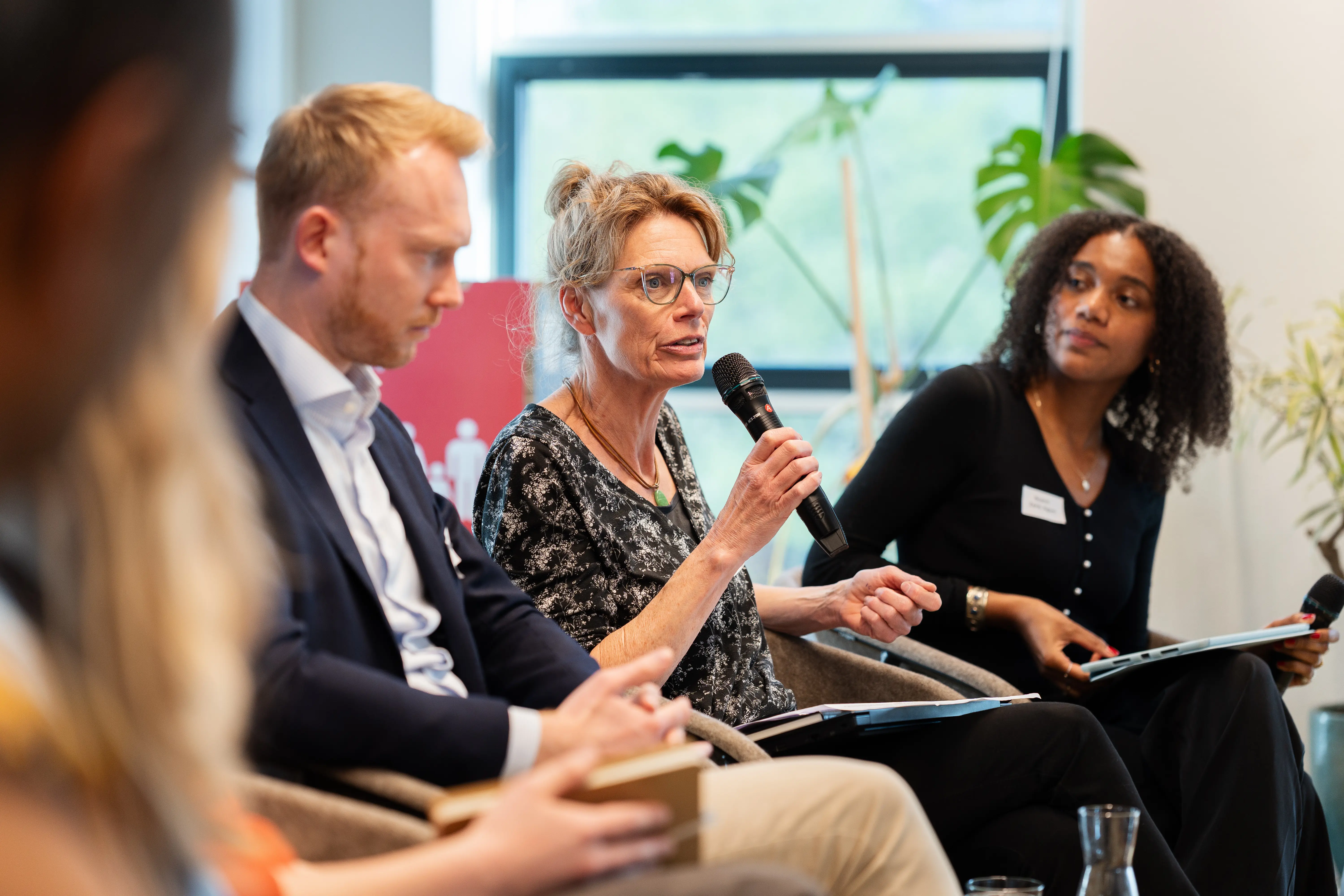
“We need concrete solutions, milestones, time-bound steps—not just ambitions.” — Hilde Stroot, Policy Lead at Oxfam Novib
Kumi Naidoo underscored the need for legally binding international frameworks, arguing that a global problem cannot be effectively addressed through purely national approaches. This perspective was echoed in the breakout session, “Legal Obligations of Fossil Fuel Phase-Out”, where participants called for a shift in narrative: from questions of political willingness and feasibility to the legal obligations of states. Rather than focusing on whether action is possible, how long it can be delayed or what the minimum acceptable response might be, the emphasis should be on translating international consensus into enforceable national action. In this framing, urgent climate action is not a discretionary policy choice, but a matter of legal duty.
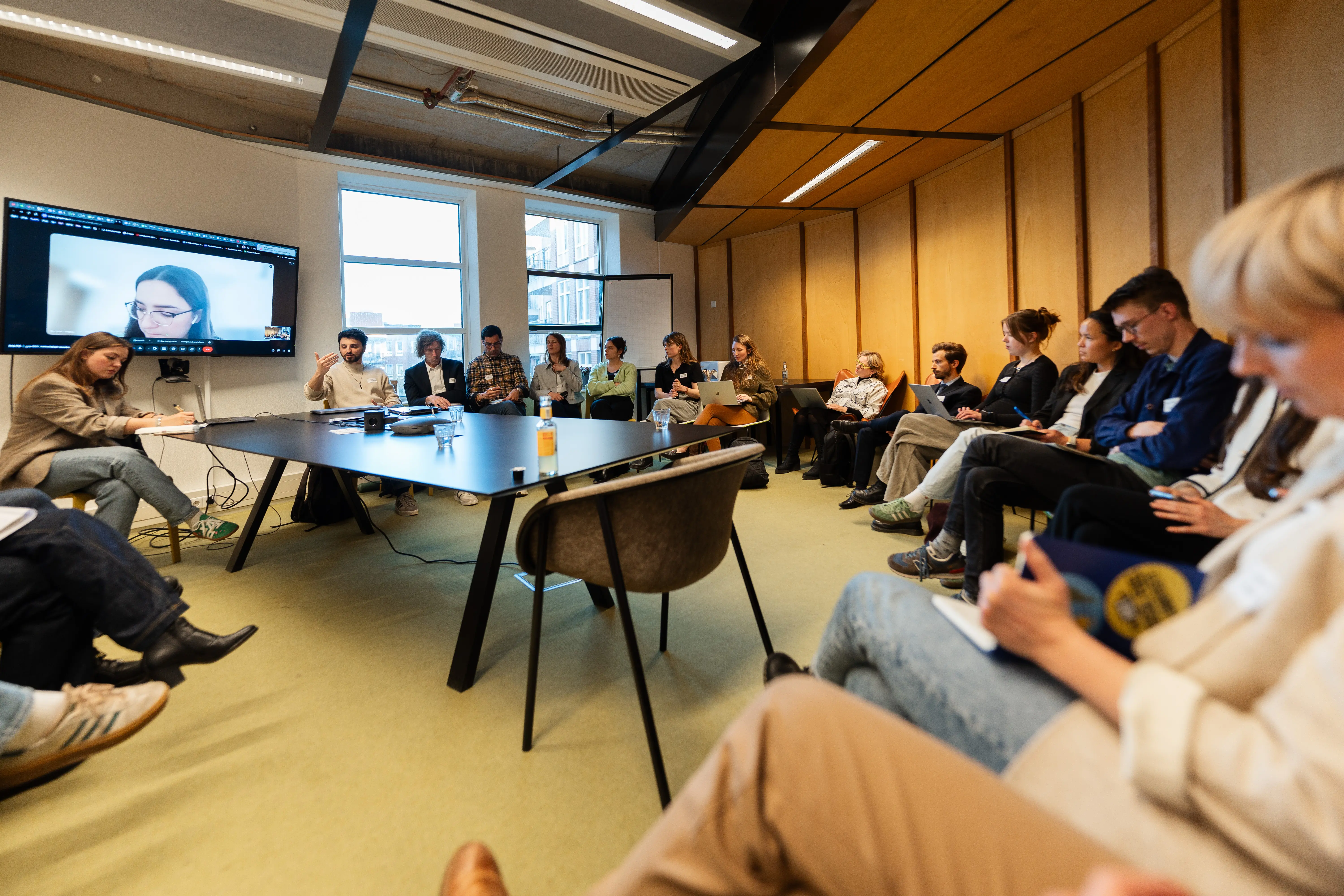
Furthermore, in the final breakout session on “Transforming Supply and Demand”, the group agreed that it is vital for states to create an environment that makes anti-fossil fuel behaviors affordable and accessible, including banning fossil advertising, removing other incentives for fossil fuel demand, improving infrastructure and subsidizing sustainable choices.
Prof. Elisa Morgera stressed that shifting the policy goals from emission reduction to a fossil fuel phase out is a game changer, because fossil fuels cause so much more harm than greenhouse gas emissions alone. Both the production and consumption of fossil fuels pollute our environment and our bodies. “Behavioural change sounds as if we all should make tremendous sacrifices. We can begin by acknowledging that the burden of measures that curb luxury fossil fuel consumption is just for the 10% richest, that’s just a small group.”
Dr. Lieke Dreijerink (Wetenschappelijke Klimaatraad) highlighted the importance of these measures to phase out fossil fuels, improve biodiversity, and lower living costs. “Removing fossil fuel subsidies and fossil advertising is a no-brainer.”
Dr. Harald Buijtendijk (tourism scientist) added that fossil fuel products like air travel holidays are an unnecessary luxury product that we could phase out first. Also, because it is the global north that benefits most from far away travel, while the consequences are felt in the global south. “We shouldn’t wait for alternatives to grow. Every year the fossil fuel industry can continue selling fossil fuels, they win, the planet loses.”
Why This Event Matters
For The Hague’s peace and justice ecosystem, these discussions reinforce the need to view climate change as a systemic risk that intersects with law, governance, and human rights. The city’s role as a hub for international cooperation positions uniquely to support new forms of multilateralism that are more inclusive and action driven.
The conversation also aligns closely with The Hague Humanity Hub’s priorities, particularly its commitment to advancing collective climate action by fostering cross-sector collaboration, amplifying underrepresented voices, and strengthening collaborative responses to global challenges.
The commitments on fossil fuel phase-out does not end here, you can engage in the dialogue further by:
- Reading and supporting the work of these CSO’s through these two position papers, “NGOs on the Transitioning Away from Fossil Fuels Conference” endorsed by the International Climate Coalition (ICC) and “Input van Jongeren: De Nederlandse inzet op de Transitioning Away From Fossil Fuels Conference” written by Jonge Klimaatbeweging, Youth for Climate, Youth Representative Sustainable Development and Klimaat en Energie Koepel
- Exploring the work of The Hague’s Climate Justice Community and by subscribing to the newsletter here
- Read our latest Earth Day story featuring Jonge Klimaatbeweging and Buying Back the Planet here
- Joining upcoming events focused on sustainable transitions and international cooperation. Check our website for upcoming events here
- Connecting with civil society actors working on fossil fuel phase-out and climate justice ahead of COP30. Reach out to us via climate@humanityhub.org to connect and collaborate.
About the Event
Organized by The Hague Humanity Hub, Oxfam Novib, Milieudefensie, International Alert, Reclame FossielVrij, World’s Youth for Climate Justice, T.M.C. Asser Institute, Jonge Klimaatbeweging, Earth Insight and Both Ends, this event took place on April 14 2026 as part of collective civil society advocacy efforts ahead of the TAFF conference in Santa Marta, Colombia.
Speakers included Prof. Elisa Morgera (UN Special Rapporteur of Climate Change and Human Rights), Hilde Stroot (Policy Lead at Oxfam Novib), Adrián Estrada (Advisor for The Netherlands Scientific Climate Council), Sjoukje van Oosterhout (Member of Parliament, PRO), Kumi Naidoo (President of The Fossil Fuel Non-Proliferation Treaty Initiative) and Ferdi Klaver (Senior Advisor, Ministry of Economic Affairs and Climate Policy). The moderator for the event was Noemi Zenk-Agyei (World’s Youth for Climate Justice).
Furthermore, four breakout sessions were organised in the following themes:
1. Legal Obligations of Fossil Fuel Phase-Out
Facilitated by: Henrieke Bünger (World’s Youth for Climate Justice), Mariana Campos-Vega (World’s Youth for Climate Justice), Prof. André Nollkaemper (University of Amsterdam), Maarten de Zeeuw (Greenpeace) and Marco Della Maggiore (Stop Fossil Fuel Subsidies Campaign)
2. Reforming Investment Law for a Just Fossil Fuel Phase-Out
Facilitated by: Dr. Stephanie Triefus (T.M.C. Asser Institute), Bart-Jaap Verbeek (SOMO), Fernando Hernandez (Both Ends), Alessandra Arcuri (Erasmus University Rotterdam) and Ingo Venzke (University of Amsterdam)
3. Transforming Supply and Demand
Facilitated by: Mannes Kocken (Reclame Fossielvrij), Dr. Lieke Dreijerink (Wetenschappelijke Klimaatraad) and Dr. Harald Buijtendijk (Breda University of Appplied Sciences Academy for Tourism)
4. Just Transition for Whom? Designing an inclusive Fossil Free Future
Facilitated by: Helena Voorhuis (Youth for Climate), Ishata Rostamkhan (Youth Representative Sustainable Development), Yoeri Dijkhof (Klimaat en Energie Koepel) and Noortje van Randwijk (Jonge Klimaatbeweging)
Find out more about the Climate Justice Community here!
Read more here!