

What began in the 1970s as a protest movement against the fossil fuel industry in the United States has grown into a global moment of reflection and mobilisation: Earth Day. Under this year’s theme, “Our Power, Our Planet,” the message is felt. Climate action is urgent and collective. But what does that collective responsibility look like in practice?
We spoke with three actors working at the intersection of climate and justice: Daan Zieren and Cléo Dorel-Watson from the Dutch Youth Climate Movement, and Paulien Boone, founder of Buying Back the Planet. Their work spans national policy, international negotiations, and community-based land stewardship. Together, they show how climate action takes shape across systems, and why justice must remain central.
The Dutch Youth Climate Movement: representation and participation
Daan Zieren started as a volunteer at the Dutch Youth Climate Movement (Jonge Klimaatbeweging, JKB) and is now its full-time chair. Cléo Dorel-Watson is part of the organisation’s international team and has participated in recent UN climate negotiations.
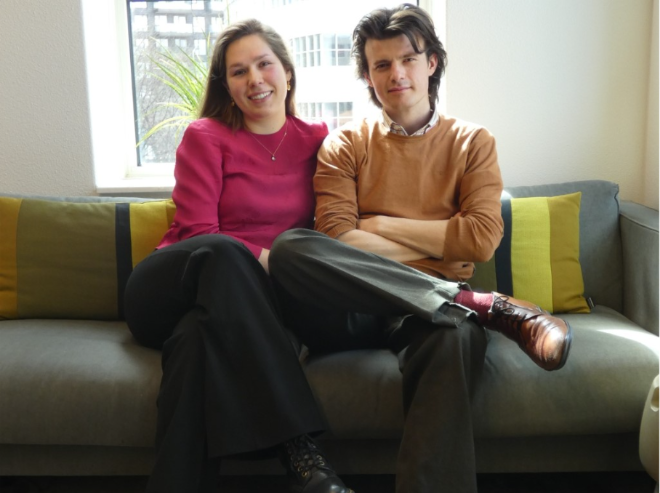
Together, they are part of a network of 90 volunteers, 11 teams, and 67 affiliated youth organisations. Their core message is clear: young people must be structurally included in climate decision-making.
“The interests of businesses are always represented at the table,” Daan says. “But the interests of future generations are not. If you don’t include certain groups, their perspectives simply don’t shape the outcome.”
For JKB, this is a matter of justice. Young people will carry the long-term consequences of climate policy, yet their influence remains limited.
“What we need is a more continuous form of democratic engagement,” Daan adds. “Climate policy today defines the conditions future generations will live in.”
An intersectional approach to climate policy
Through initiatives such as the Young Climate Agenda 3.0, JKB approaches climate as a systemic issue. Their work connects themes like energy, housing, food systems, biodiversity, and education.
“Climate justice is one of our core principles,” Cléo explains. “The crisis affects different groups in very unequal ways. And often, those least affected have the most access to power.”
This inequality is visible globally and locally. In the Netherlands, energy poverty already affects many households. People live in poorly insulated homes and cannot afford to heat them. Climate impacts are not only future risks, but present realities.
To address this, JKB creates spaces for dialogue that include a wide range of perspectives.
“If you want a meaningful agenda, you need to include different lived experiences,” Daan says. “Otherwise, you risk reinforcing the same inequalities.”
Navigating power and influence
Working within political and institutional spaces comes with challenges. JKB often encounters tokenism, where youth participation is symbolic rather than meaningful.
“Sometimes organisations want to be seen engaging with youth, without engaging with the substance,” Cléo explains. “They want the photo, not the conversation.”
At the same time, the movement uses these moments strategically.
“It can be a way to enter spaces we would not otherwise access,” she adds.
Over time, this has led to more substantive engagement. JKB contributes to policy discussions and collaborates with sector organisations. Still, barriers remain. Much of the work is done on a voluntary basis.
“There is often little awareness that young people are doing this alongside studies or jobs,” Daan says. “That limits participation.”
From The Hague to global negotiations
JKB is also active in international climate diplomacy. Cléo has participated in UN climate conferences, where youth voices are still underrepresented.
“The first time I attended a COP, I felt like a tourist,” she says. “You have to learn how to navigate the language and the negotiations.”
Preparation starts well before the conference.
“By the time the COP begins, most positions are already shaped. The conference is the final push.”
A key focus area is climate adaptation; the practical steps that help people cope with the impacts of climate change, rather than reducing the emissions that cause it: “For many communities, adaptation is not abstract. It is about survival,” Cléo explains.
JKB is also involved in discussions on phasing out fossil fuels, including the upcoming international conference on this transition. “This transition has to be just,” Daan says. “You cannot phase out fossil fuels without offering alternatives to countries that depend on them.”
Public pressure plays an important role: “If people are not talking about these issues, policymakers can ignore them,” Cléo adds.
Buying Back the Planet: rethinking land ownership
While JKB focuses on policy, Paulien Boone approaches climate action through land and ownership.
Based in The Hague and member of The Hague Humanity Hub, she has worked across sectors, from the Ministry of Foreign Affairs to her consultancy firm, Acronyms. Her latest initiative, Buying Back the Planet, reflects a shift towards more tangible forms of climate action.
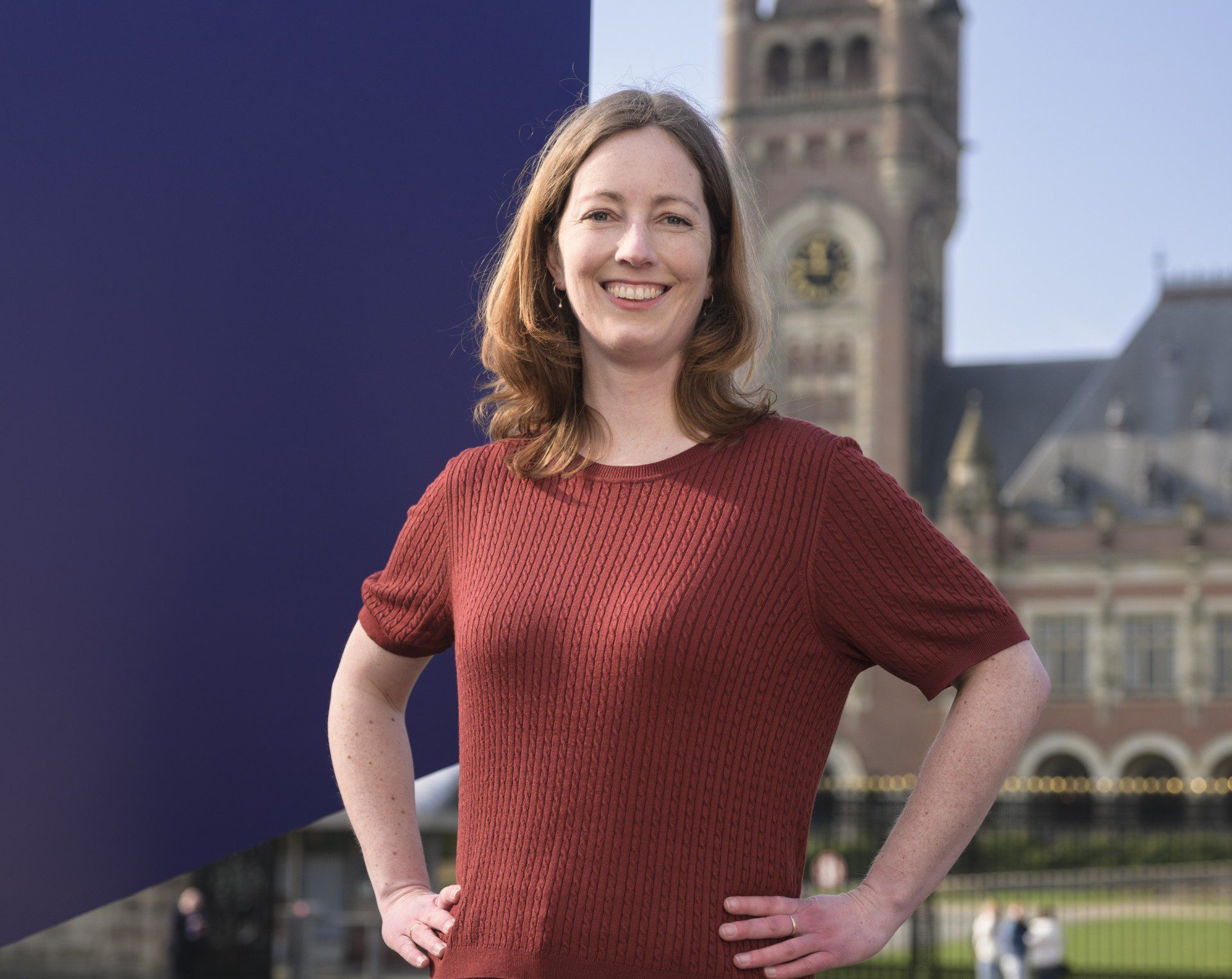
“We have been talking about sustainability for a long time,” she says. “Now it is about making it concrete.”
The initiative hopes to enable citizens to collectively invest in land and manage it with local partners. The aim is to move away from extractive land use towards long-term stewardship.
“It is literally investing in the earth,” Paulien explains, “but in a way that prioritises care.”
Land, ownership, and justice
In Europe, land is often concentrated in the hands of large commercial actors. This contributes to soil degradation, biodiversity loss, and emissions. The issue is particularly urgent in Europe, which is warming faster than the global average.
Buying Back the Planet promotes collective ownership models, often referred to as the commons.
“We all depend on healthy ecosystems,” Paulien says. “That makes land a collective interest.”
Once land is acquired, it is managed with local partners such as regenerative farmers. This supports ecological restoration and strengthens local agency.
“Working with local communities is not only effective, it is also a matter of justice,” she explains. “It brings decision-making closer to those connected to the land.”
Building a new model
Turning this idea into practice comes with challenges.
“There is still a lot to figure out,” Paulien says. “People trust us with their money to manage land collectively. That requires strong governance and transparency.”
Working across countries adds complexity, due to different legal systems and ecological contexts.
“You are dealing with multiple systems and partners at once,” she explains.
At the same time, the idea resonates: “People immediately understand it. Buying land together to take care of it just makes sense.”
Collective action as the way forward
Across both initiatives, a shared message emerges. Climate action is not only about technology or policy, but also about participation and ownership.
For JKB, this means ensuring young people are part of decision-making. For Buying Back the Planet, it means rethinking how land is owned and managed.
Both point towards a shift from individual action to collective responsibility.
“Climate action can feel overwhelming,” Paulien says. “But it comes down to how we relate to the earth.”
“Transitions take time,” Daan adds. “They are made up of many small steps.”
“As a group, we always have impact,” Cléo says.
Beyond Earth Day
Earth Day is a moment to reflect, but also to act. Whether through policy engagement, community organising, or collective investment, there are many ways to contribute. The challenge is to make that engagement continuous.
A just and liveable future depends on the systems we build together.
Do you want to get involved? You can learn more about our climate justice community!
Learn more!