

Last week, The Humanity Hub hosted a Handshake at the new Spui Campus in The Hague, in collaboration with TU Delft, as part of the 9th Thesis Conference for Engineering and Policy Analysis (EPA) graduates: Grand Challenge Accepted 2026. Alongside EPA Master’s students, we were all left inspired by the guest speakers’ insights and graduate’s thesis presentations.
Looking back on it now, we draw our insights from the Handshake interview with Lars Peter (ACAPS). As a self-proclaimed “mercenary, missionary and misfit”, he dared students to stand up for their beliefs and speak up when things in their workplace look different than they envision.
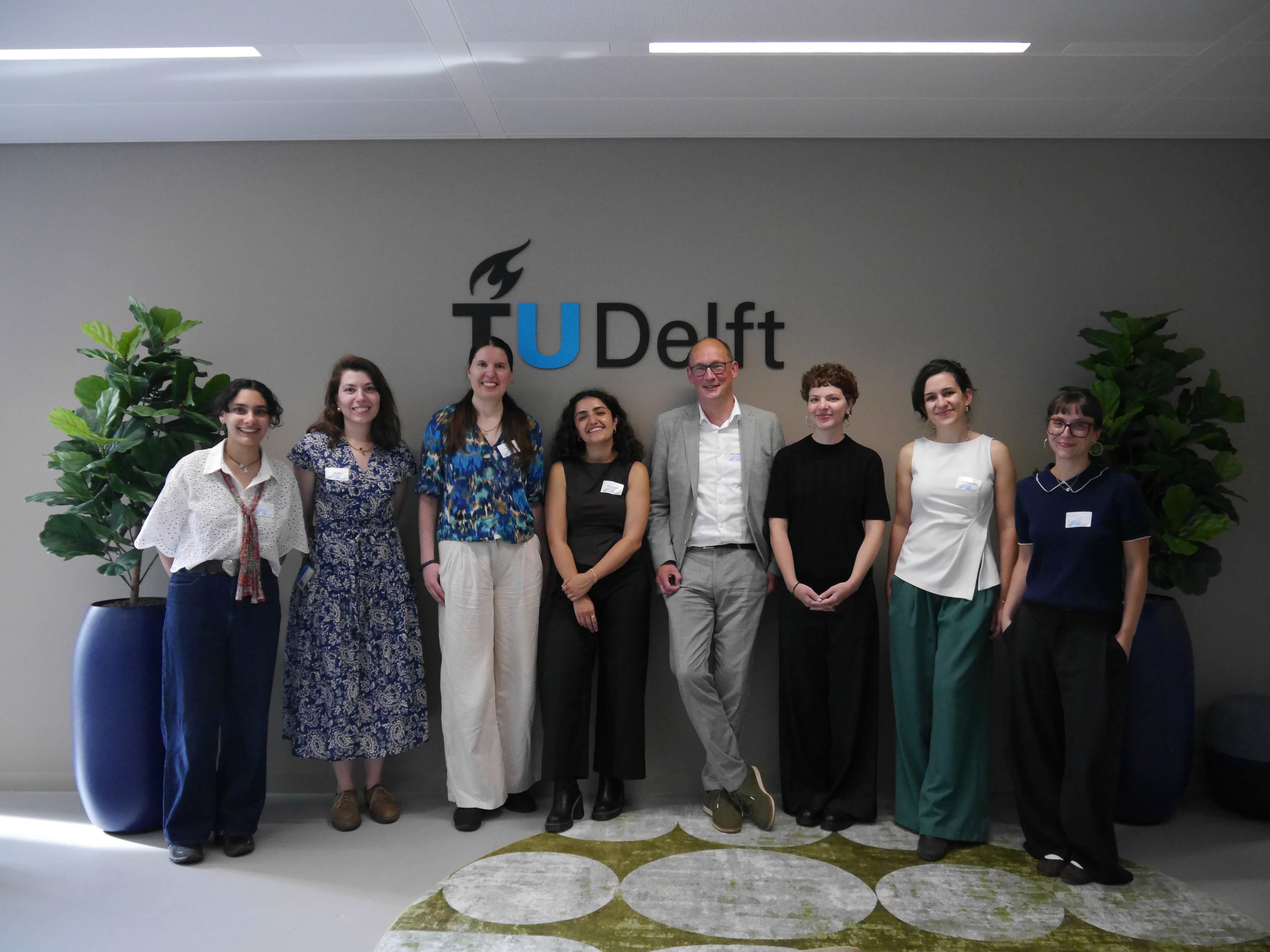
Keynote speaker, Juliane Schillinger (Red Cross Red Crescent Climate Centre), gave a presentation on anticipatory humanitarian action and led an interactive activity where participants were asked to play the role of a decision maker on the ground of conflict-affected regions. Participants had to green- or red-light different scenarios that varied in level of conflict, access to information, local acceptance of their organisation, and other contributing factors. This exercise illustrated a key reality of the field: decisionmakers often need to make snap decisions with very little information. Her advice:
“Embrace the chaos of it all and try to make it work. Messy places still need help.”
Key Insights
The theme of the two speakers seemed to highlight the “messiness” of humanitarian and conflict related work. Both speakers underscored the complexity of humanitarian and conflict-related work, and the skill required to navigate it well. As Lars said:
“We often don’t even know the question being asked”.
Both speakers also reflected on the sector’s evolving funding landscape and the recent budget cuts r. Lars offered a grounding perspective: “having more funding doesn’t automatically make a project more successful”, a reminder that quality work is driven by passion, not just resources. Lastly, the call for centering local communities and knowledge was prevalent throughout the day.
Discussion Highlights
The Role of Data
Both speakers highlighted that humanitarian decisions often have to be made with limited information, and that strong partnerships help close that gap. ACAPS is a Dutch disaster analysis organisation that independently helps humanitarians, donors, influencers and fundraisers to make informed decisions. The Climate Centre of the Red Cross Red Crescent uses participatory risk assessment in combination with the ACAPS database to inform their project teams.
Local knowledge
This theme came up in Juliane’s keynote highlighting the connection between international organisations and the local problems they work on. Juliane explained that despite considerable progress in incorporating local communities into aid delivery, local knowledge is still often missing from formal risk assessments. While data can help answer questions such as when will a hazard strike? Local knowledge is needed to complement that data, answering questions like: Which hazards should be prioritized? What does it actually mean when a flood hits a village?
Political vs. Technical Solutions
Lars encouraged the audience to ask the right questions to the right people: “don’t seek technical solutions for political problems”. Timely advice for the new graduates entering the field, especially those from a technical university. He urged experts to burst out of their silos and look at problems holistically, rather than focusing on the issue through the pinhole of their own expertise.
About the Event
On the 27th of August, the Humanity Hub had the pleasure of collaborating with TU Delft to create this year’s Grand Challenge Accepted event. Juliane Schillinger, Technical Adviser Climate and Conflict at the Red Cross Red Crescent Climate Centre, was the keynote speaker. We also brought our Handshake event series to this year’s graduating cohort, featuring Lars Peter Nissen (ACAPS), to talk about career advice for the humanitarian and policy sector. Marya el Malki, an EPA alumna herself, moderated the discussion.
The Handshake is an interactive event series designed to connect aspiring changemakers with professionals in the peace, justice, and “for good” sectors. These sessions are part of the Humanity Hub’s Talent for Good Porgramme and spotlight personal and professional journeys, offering insight, inspiration, and a space for open exchange between emerging talent and sector professionals.
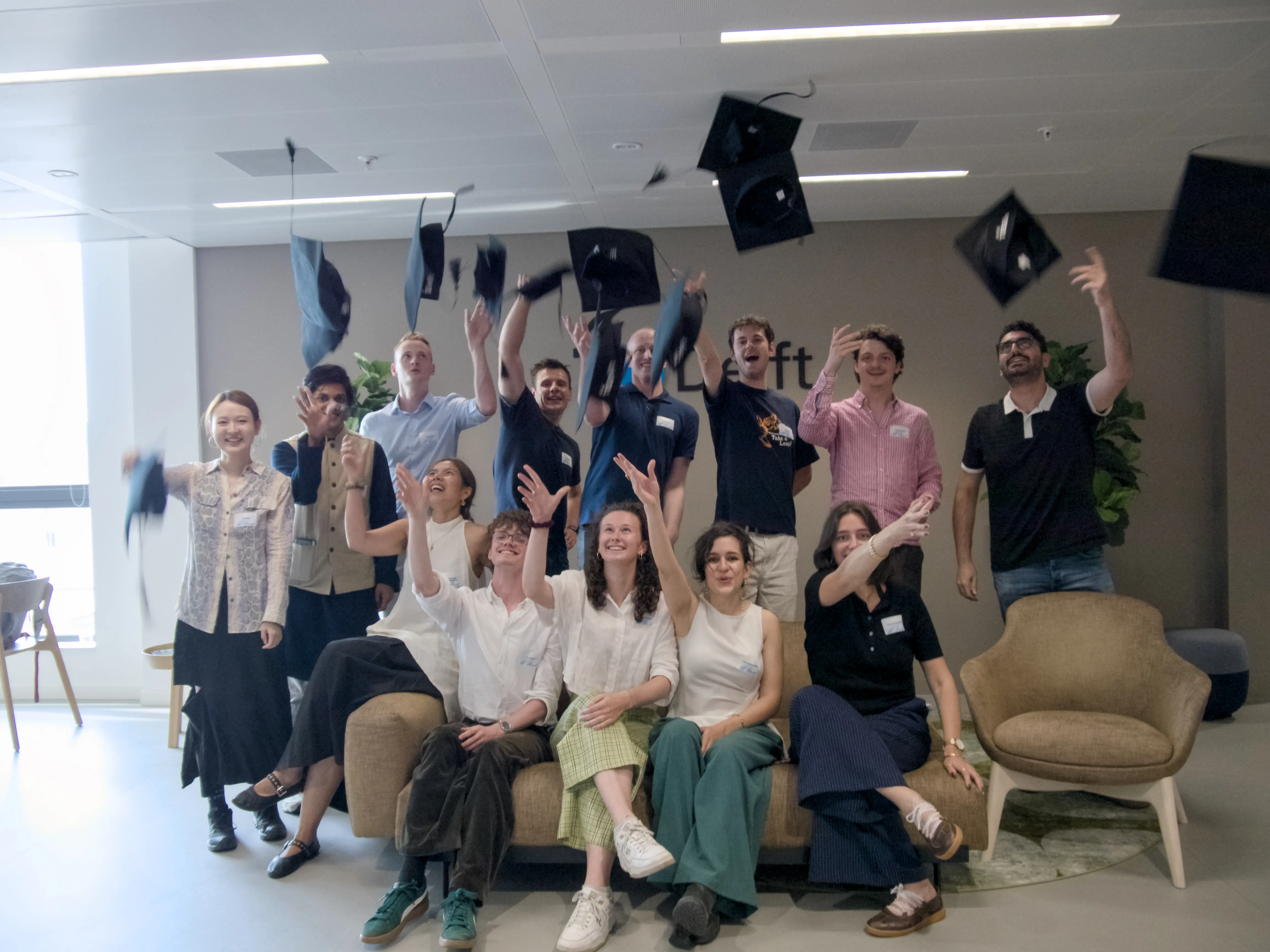
Grand Challenge Accepted is a yearly conference and graduation ceremony for the Master’s Engineering and Policy Analysis (EPA) Programme at TU Delft. At this event, EPA students not only present their graduation research to a broad audience but also engage in conversation with prominent guests about and reflect on the societal challenges their research focuses on.
Learn more
This event was held at the new TU Delft Spui campus in The Hague, here is why TU Delft has strengthened its presence in The Hague.
Interested in reading about the interview with Lars? Keep an eye out on our Career Insights page.