
Stella Rothenberger | N’NINKIE
Humans of the Hub 2.0
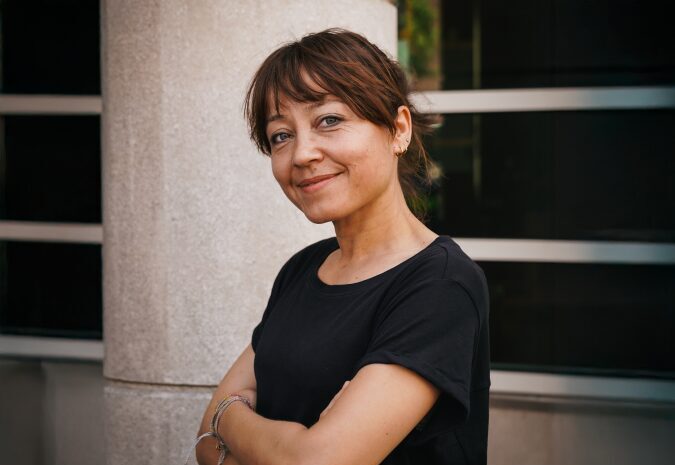
Stella shares how N’NINKIE is spotlighting local African changemakers and Indigenous solutions that drive sustainable change from within.
17 November, 2025
Growing up in Sierra Leone, women’s rights activist Rugiatu Neneh Turay swam against the current even as a young girl. From daring to play football and climb trees to speaking out alone against Female Genital Mutilation in her community, Neneh's career as an activist grew directly from experience. Now, through N'NINKIE, she's working to shift the power in International Development and platform local voices from Africa.

“Girls were taught not to play football, not to climb. I know I’m a girl, but I’m also a human being; I want to climb, I want to play football.”
Rugiatu Neneh Turay
Co-Founder, N’NINKIE
Neneh was the first in her community in Sierra Leone to speak out against female genital mutilation (FGM), which involves the forced cutting of the clitoris. This is part of the Bondo culture, where she is from. To end and break the silence around FGM, Neneh founded Amazonian Initiative Movement (AIM) in November 2000 after conversations with other women about the pervasiveness of the practice, even in their refugee camp.
For the past 25 years, Neneh’s strategy has shown the importance of cultural sensitivity and local knowledge. Upholding the Bondo Culture without FGM was the turning point for the movement against FGM, as people from her community were initially afraid that ending FGM would destroy their culture. She introduced the Bloodless Rite, which earns women and girls the rite of passage into womanhood without cutting while still supporting Bondo.
Ending FGM goes further than becoming free from harmful practices. It’s about shifting power, breaking silences and standing up for every girl’s right to grow up safe, educated and free. AIM focuses on gender equality, human rights, education, anti-corruption, and community empowerment.
This year, Neneh founded N’NINKIE together with Stella Rothenberger. Both having decades of experience of working alongside NGOs in Africa, they decided to bring Neneh’s strategies and way of thinking a step further. How? By amplifying voices of African changemakers, shifting the power within development, reimagining Western narratives and redefining international collaboration through N’NINKIE.
“In our schools we have been taught to believe that we are solely dependent on the West,” Neneh explained.
The colonial era may have ended, but traces of colonial thinking can still be found in the capillaries of society. Remnants of the colonial system influence international cooperation, as most development programmes by the Global North are still structured by dependence. N’NINKIE aims to change this systematically, by creating and promoting knowledge production from an African perspective. The global South N’NINKIE-team works with scholars to bridge the gaps between lived experience and academic research. “We believe development research must begin with those who live it. Local knowledge isn’t a case study, it’s the foundation. Indigenous knowledge belongs at the centre.”
The way humanitarian aid has been structured falls short, as numerous academics proofed the negative consequences caused by the wave of aid coming to Africa from the West. A study from 2022 showed that only less than 2% of all humanitarian funding goes directly to local NGOs. In short, it is not helping Africa structurally and ignores the power of local communities. With N’NINKIE, they want to show what does work. “There are things happening in Africa that nobody knows about,” says Neneh, and N’NINKIE wants to change that. Its platform spotlights successful community development projects, advocates for a local knowledge-based and community-led approach and offers inclusive perspectives of the Global South.
“Sierra Leone only has eight million people. Do you know how many flights land in Sierra Leone every year, full of Western helpers? Do you know how much that costs?”
Today, the wrong narrative is subtly upheld across the sector, framing the Global North as the knowledge holders who can ‘teach’ and ‘help’ Africa. However, lived experience – amongst other knowledge – is held by local communities, and it’s precisely this knowledge that makes policy work. Through N’NINKIE, Neneh wants to redefine the terms of cooperation between the Global North and South, so that instead of being ‘allowed’ a seat at the table, Global South changemakers are empowered to see it as their house, their table, and their place to say who sits at it.
As in other places, the community of The Hague is not immune to these harmful narratives. As a member of The Hague Humanity Hub, N’NINKIE brings a vital perspective to the peace and justice community of The Hague, directly from the ground in Sierra Leone. By being apart of this community, N’NINKIE bridges the local with the international, lived experience with institutional knowledge, and ultimately pushes peace and justice work forward by challenging us to question framing, funding, objectives and knowledge transfer from within.

We need another way of thinking, working and collaborating to develop sustainable societal, political and economic stability. Where does humanitarian aid end? How can Africa become free from foreign dependency? Whose knowledge defines the development work? According to N’NINKIE development must come from within the community yet remain connected to the outside. This applies to both the Global South and the Global North.
“The Global North’s continent faces similar issues. Collaborating is key. We must take care of our citizens. Leaders should make sure that they discuss tangible solutions. Hold your leaders accountable, to make sure that your citizens live better.”
Neneh urges to rethink development, shift the power in knowledge, decolonise aid, and reimagine Western narratives. For inspiration, N’NINKIE is the place to be. They empower a new generation of African scholars to reclaim the continent’s narrative, build networks that ensure African voices drive policy making and sustainable solutions, while maintaining strong relationships with the Global North. “What we do, we do for the world: it is for the Global North and Global South to begin to work in equal collaborative partnership, so both ideas will shape the world,” concludes Neneh.
Through N’NINKIE, they are shifting the power by spotlighting local changemakers and Indigenous solutions that drive sustainable change from within. They partner with local communities, activists, policymakers, and scholars across Sub-Saharan Africa, with a focus on Sierra Leone, who are at the forefront of shaping their own futures and fostering long-term progress rooted in African-based strategies
Learn more about N’NINKIE—
Stella shares how N’NINKIE is spotlighting local African changemakers and Indigenous solutions that drive sustainable change from within.

Natasha Syed, founder of Skilledin Green, shares how she’s connecting people to green jobs and why sustainability should be part of every profession.

Read how Max is reshaping the global economic landscape through the principles of equity, sustainability, and shared prosperity.

Read how Lotte sees citizenship education as an opportunity to contribute to reducing both inequality of opportunity and polarization