
From the Classroom to the World Court: The Climate Justice Journey Reaches The Hague

Climate
A youth-led campaign brought climate justice to the highest court — and won.
19 December, 2025
From systemic injustice to mental health and intergenerational responsibility, it’s evident that the climate clock is ticking. On Monday 15 December, different perspectives on just climate actions came together at the Peace Palace, the place where an historic ruling on climate change was made this year.


The long-awaited advisory opinion on climate change from the International Court of Justice (ICJ) marked a turning point. For the first time, the world’s highest court clearly connected climate change to states’ legal responsibilities toward people across borders and across generations. It reinforced that climate change is no longer only a question of targets and timelines, but of rights, duties, and accountability in the here and now.
The fact that this edition of Hague Talks took place in the Peace Palace, home to the International Court of Justice, was no coincidence. It is here that global legal principles are shaped and tested, and throuugh Hague Talks brought into the public sphere. The evening reflected The Hague’s unique role as a place where international law, political responsibility and lived experience meet.
Behind climate justice are many perspectives: ethical warnings too clear to ignore, security challenges reshaping global peace, activists protecting their communities, young leaders fighting for a liveable future, and governments trying to balance urgency with justice.
Hague Talks speakers – Tom Middendorp, Behnam Taebi, Susana Muhamad, Hanna Verboom and Noemi Zenk-Agyei – with backgrounds in law, science, ethics, defence, the arts, and policy shared what just climate action means to them, from their own lived experience.
As climate legal frameworks are advancing, the crisis of climate change keeps on asking for just action from us, from everyone. Climate advocate and legal researcher Noemi Zenk-Agyei started her talk with the age of the people in the audience: “Often people think the climate crisis is a youth issue, but it is intergenerational. We all need to show up.” She follows asking everyone to put pictures of their children, parents and grandparents on their desk, to remind oneself what planet you want your loved ones to live on.
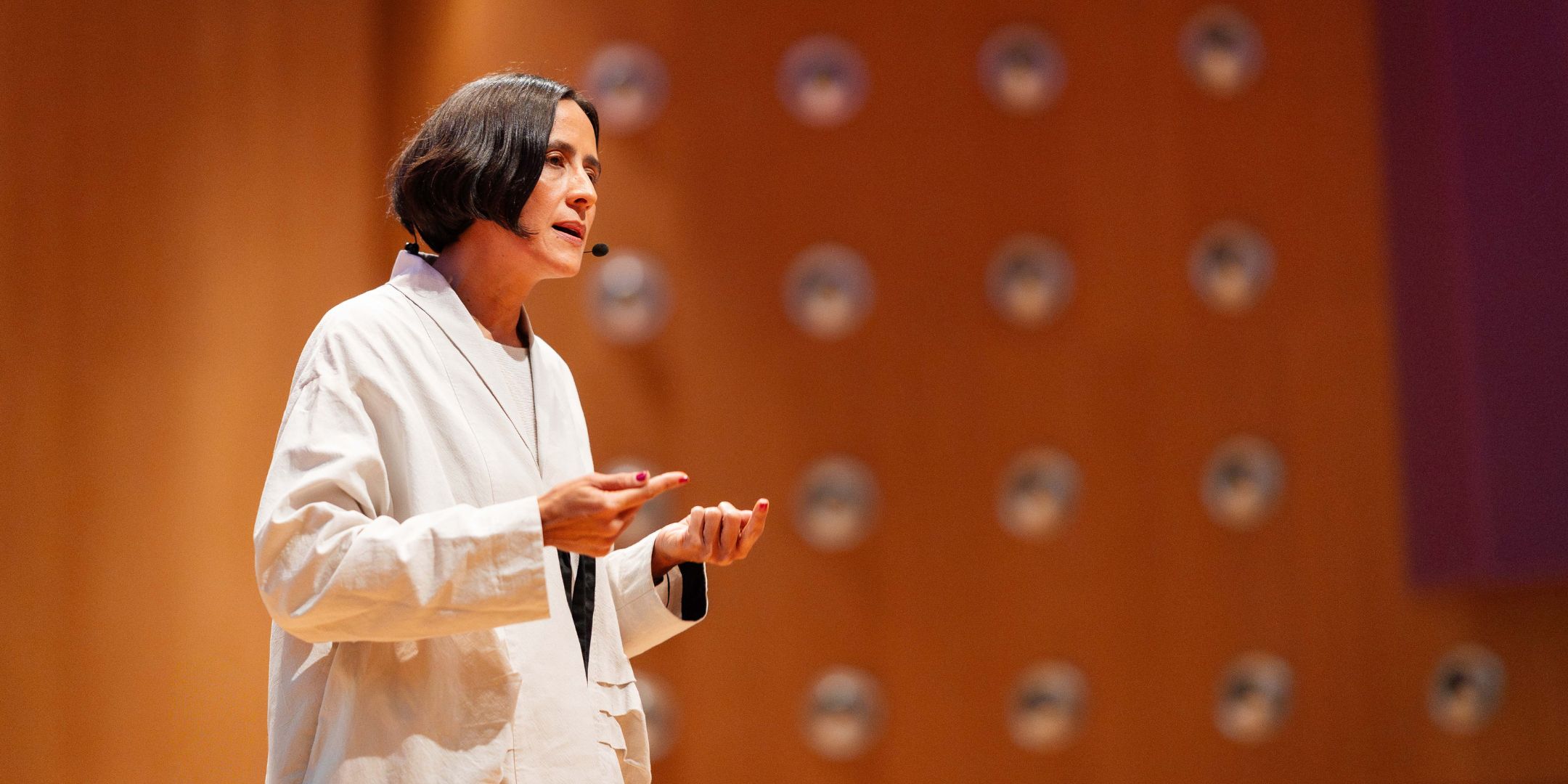
Susana Muhamad, Former Colombian Minister of Environment and Sustainable Development, also reflects on life for future generations saying: “We receive the gift of life. We should return it with more life and not more death.”
“Climate change is happening at our doorsteps, also in our own apartments here in The Netherlands.”
Climate change is already reshaping daily life: either through higher groceries prices or floods that destroy our homes. “Climate change is happening at our doorsteps, also in our own apartments here in The Netherlands,” thus Behnam Taebi, Professor of Energy & Climate Ethics at TU Delft.
“Climate change destabilises societies and is a breeding ground for conflict.”
Tom Middendorp, Former Chief of Defence of The Netherlands, stresses the need to increase the sense of urgency and to push for opportunity, because “stories about the climate crisis are not isolated events, they are ticking time bombs around us”.
Middendorp continues touching upon the under-explored link between climate change and global security: “Climate change destabilises societies and is a breeding ground for conflict.” Climate and security are two sides of the same coin. Climate change is not just an environmental crisis. It is a human one — shaping who is protected, and who is left behind.
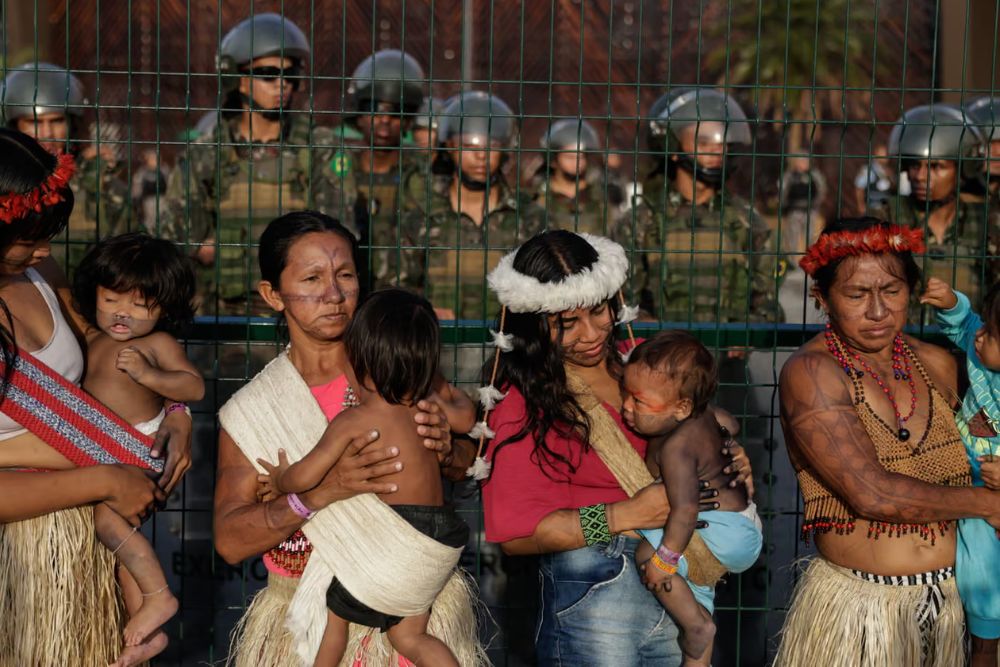
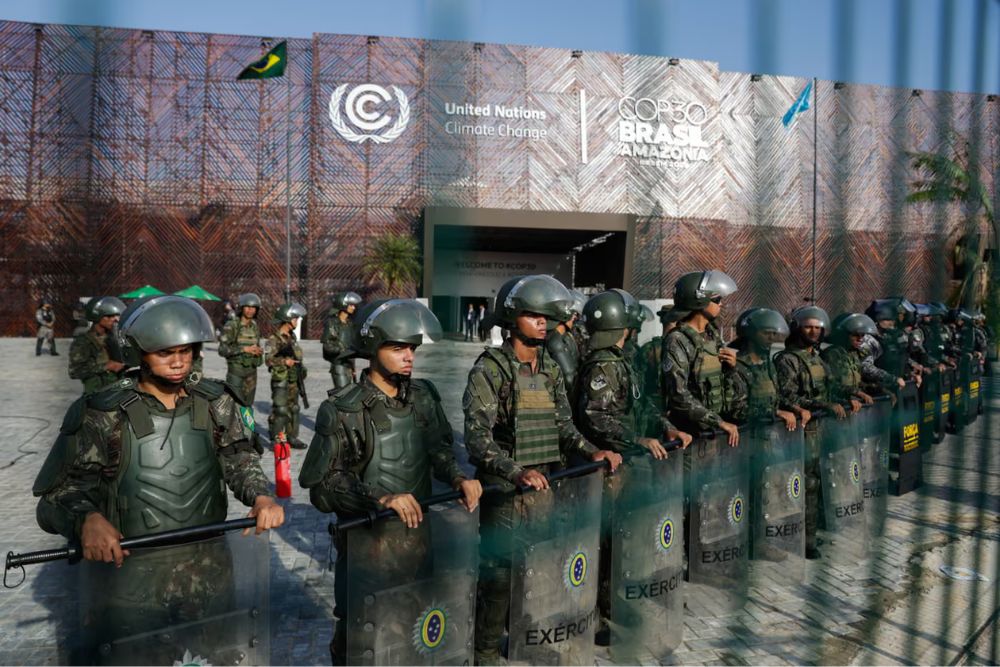
Indigenous voices are kept outside the climate conversations, while they possess invaluable knowledge. “Climate action is just when we listen to the people at the frontline of the consequences,” says Muhamad. On the large presentation screen behind her appear photos of indigenous people being blocked at COP30 in Brazil. A stark illustration of exclusion she described.
Muhamad highlights how the capitalist system takes frontline communities for granted as casualties. However, we must recognise that those livelihoods, traditions, cultures, those people are crucial for a liveable planet.
“Climate change is causing injustice and will exaggerate already existing inequalities.”
That is why climate action alone is not enough. We need climate justice — action rooted in fairness and lived realities. From rising seas to rising food prices, from displacement to damaged homes: the impacts are never equal. “Climate change is causing injustice and will exaggerate already existing inequalities,” tells Taebi.
“It’s like trying to put a triangle in the circle. The triangle is the change; the circle is the current system. It doesn’t fit.”
To have just climate action, “we will need to transcend the capitalist system that has created the injustice and the climate crisis,” adds Muhamad. She advocates for an economic systemic change, because the current rules of the financial system are working against climate solutions. “It’s like trying to put a triangle in the circle. The triangle is the change; the circle is the current system. It doesn’t fit.”
Actress, filmmaker and social entrepreneur Hanna Verboom shares her mental health journey, to draw a parallel between the mental health crisis and climate crisis: “Both are a matter of disconnection. One is disconnected from itself and the other, the other disconnected from the environment.” We can’t see the other if we don’t dare to see our true selves. For change to happen “we must start within and confront the collective pain beneath.”
“Both are a matter of disconnection. One is disconnected from itself and the other, the other disconnected from the environment.”
Verboom questions if we dare to address the collective pain beneath it all and sit with the discomfort. “Western society often struggle with an addiction to growth and consumerism. As a society, we struggle with a collective pain that underlies our addictions.” What do we do with addicted people? We tell them to go look for the pain under that addiction. Instead of treating the symptoms, we need to address the root cause.
Middendorp agrees on disconnection: “We need to connect; we need to make this a common problem. We need to address the root cause of it.”
“When about 30% wants to change the system, that is when it starts to crumble.”
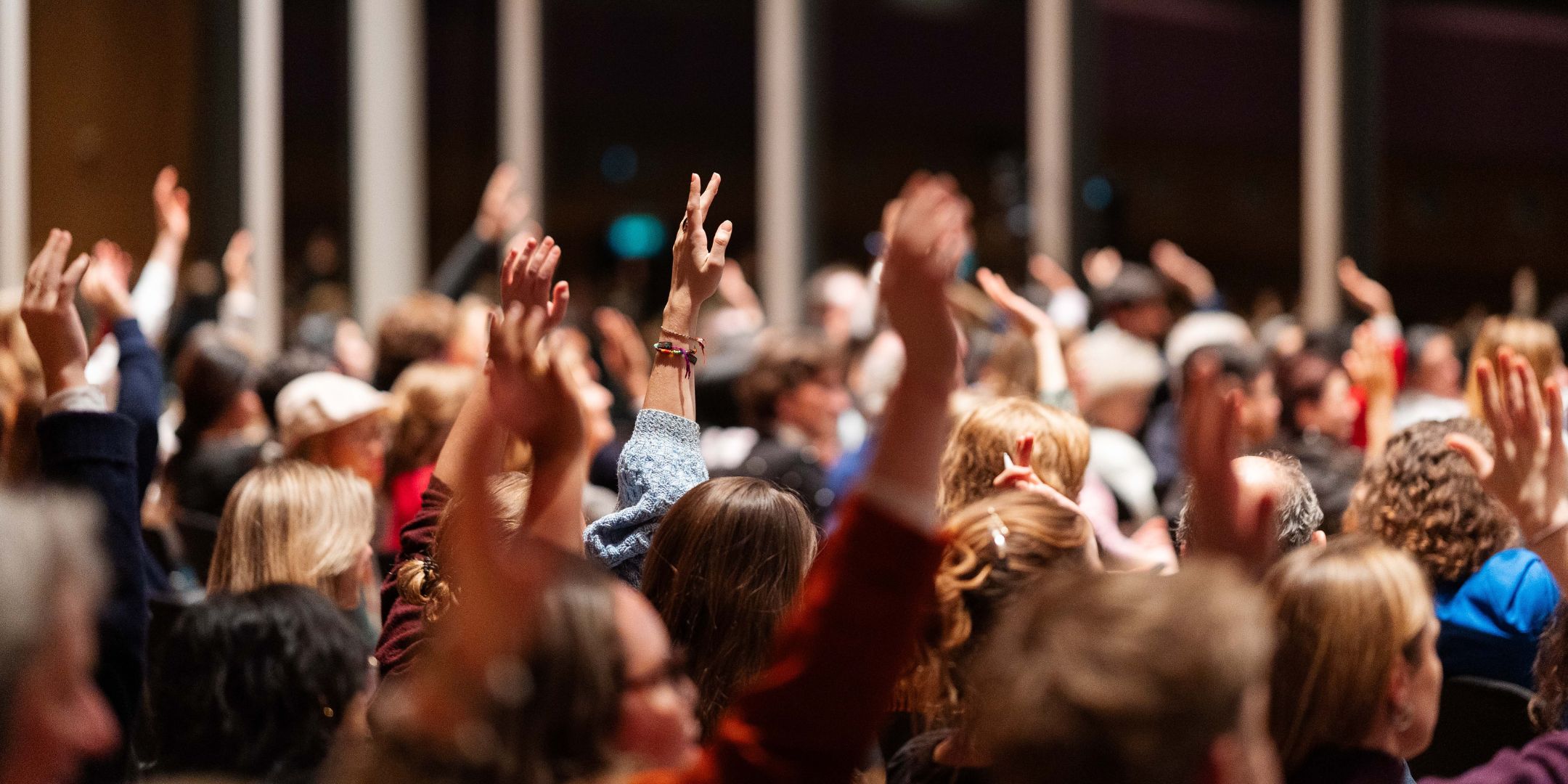
There is a lot to do to address climate change and to make climate action just, but to end on a positive, tangible and hopeful note, Verboom reminded us that only three tenth of people within a system are needed for it to change: “When about 30% wants to change the system, that is when it starts to crumble.” All speakers call for collectiveness, because “individual actions can create ripples; collective actions can create waves,” Zenk-Agyei concludes.
Here at The Hague Humanity Hub, much of our work this year has focused on developing a Climate Justice Community, bringing together changemakers working at the intersection of climate, peace, and justice. Not to provide ready-made answers, but to create the conditions for sustained dialogue, cross-sector collaboration, and collective imagination.
We invited those who wish to continue this conversation — and to help shape what just climate action can look like in practice — to join and contribute to these ongoing efforts.
Written by Sacha Verheij
Learn more about the Climate Justice Community! Sign up to the Climate Justice Newsletter!—
We thank all who made this evening possible: our speakers, our artists, our volunteers, our partners Gemeente Den Haag, Ministerie van Buitenlandse Zaken, Hague Project Peace and Justice, and the team at The Hague Humanity Hub.
We thank the Peace Palace for hosting and Holland Park Media for their audio-visual support. You can watch Hague Talks back here.
Watch the livestream back
A youth-led campaign brought climate justice to the highest court — and won.


Climate advocate and lawyer Jule Schnakenberg shared insights into the future of climate justice, the power of youth in global grassroots movements, and the ICJ’s advisory opinion on climate change.

As NATO leaders gathered in The Hague, over 250 people came together at Hague Talks to reimagine peace through art, lived experience, and radical hope.