Help shape the Hub’s next chapter
We are evaluating eight years of the Humanity Hub, and we want your perspective. No more than five minutes, open until 23 October.
Take the survey
On 18 September 2024, the United Nations General Assembly (UNGA) adopted Resolution A/RES/ES-10/24. The resolution, introduced by the State of Palestine, welcomed the International Court of Justice (ICJ) Advisory Opinion from 19 July 2024 on the Legal consequences arising from the Policies and Practices of Israel in the Occupied Palestinian Territory, including East Jerusalem. It also communicated the UNGA’s demand that, amongst other things, “...Israel brings to an end without delay its unlawful presence in the Occupied Palestinian Territory, which constitutes a wrongful act of a continuing character entailing its international responsibility, and do so no later than 12 months from the adoption of the present resolution”(*).
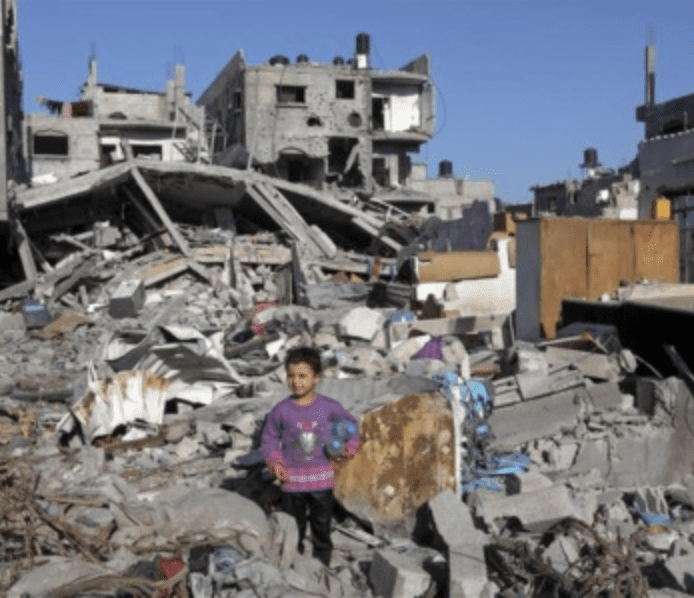
The resolution further called upon all States to comply with their obligations under international law, both in respect to their joint and separate actions, as well as the actions of their nationals, companies and entities under their jurisdiction. Still, with the expiry of the 12-month deadline for Israel to end its unlawful presence in the Occupied Palestinian Territory fast approaching, contemporary reports from the United Nations describe escalating attacks in Gaza by Israel’s military, and the spread of famine. The UN Under-Secretary-General for Humanitarian Affairs and Emergency Relief Coordinator, Tom Fletcher has damningly stated that: “Death, destruction, starvation and displacement of Palestinian civilians are the result of choices that defy international law and ignore the international community.”
In this panel event, co-organised by the Asser Institute and the Council of Arab Ambassadors in The Hague, four experts, including Ambassador Ammar Hijazi, Head of the Palestinian mission to the Kingdom of the Netherlands, and Permanent Representative of the State of Palestine to International organisations in The Hague, will reflect on state compliance with UNGA Resolution A/RES/ES-10/24. They will particularly reflect on the legal and political consequences which may follow for states and the international legal order as a whole, taking into account the UNGA resolution’s deadline.
(*) UNGA Resolution, A/RES/ES-10/24, p.5, para. 2.
Register here This link opens in a new tab
From workshops and trainings to large conferences, our modern facilities — including hybrid options and sustainable catering — ensure a smooth experience. We also offer optional support with guest registration, check-in, ticketing, and event communications. Contact our team for a custom, no-obligation quote: