Help shape the Hub’s next chapter
We are evaluating eight years of the Humanity Hub, and we want your perspective. No more than five minutes, open until 23 October.
Take the survey
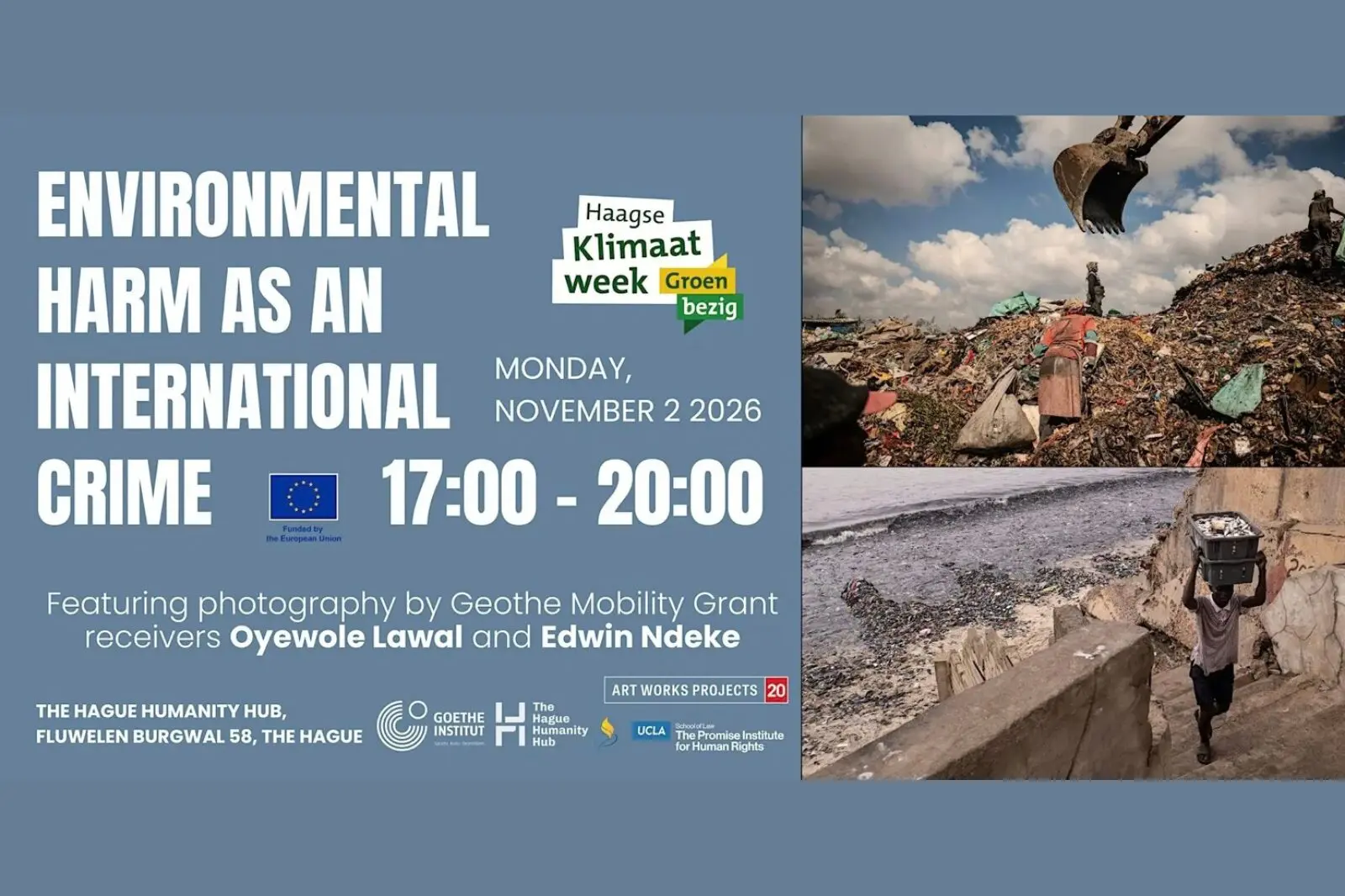
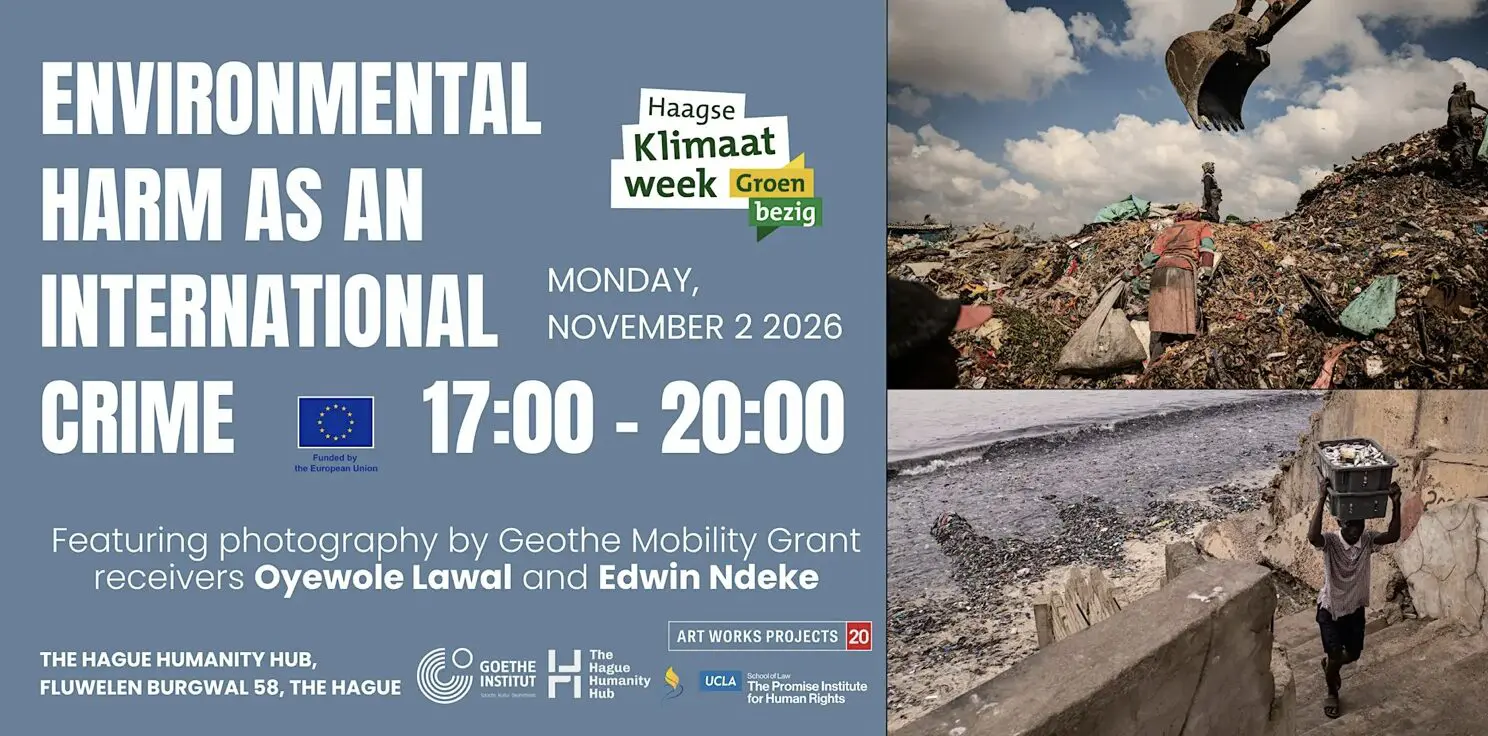
Explore how international law, ecocide and visual storytelling can advance accountability for serious environmental destruction.
What happens when environmental destruction is so severe that regulation, compensation or civil litigation no longer seem enough? When should those responsible be held personally accountable—and could serious harm to the environment be treated as an international crime?
From pollution and extractive industries to the destruction of ecosystems during armed conflict, environmental harm can have devastating and long-lasting consequences for communities, livelihoods and future generations. Yet international criminal law remains one of the least-used tools for addressing these harms.
This event, organised by The Promise Institute for Human Rights, Art Works Projects and The Hague Humanity Hub, brings together photographers, lawyers, advocates and climate justice actors to explore how this may be changing.
The evening begins with the work of Oyewole Lawal and Edwin Ndeke, Emerging Lens Fellows whose photography documents environmental degradation and its consequences for the people and communities living with it. Their work provides a human and visual starting point for a wider conversation about environmental destruction, responsibility and justice.
From there, we turn to the law. International criminal law already provides some possibilities for addressing serious environmental harm through existing crimes, including war crimes and crimes against humanity. At the same time, a growing international movement is working to establish ecocide as a new international crime, creating a clearer legal route for addressing severe and widespread or long-term environmental destruction.
Recent developments are bringing these questions closer to legal practice. In December 2025, the Office of the Prosecutor of the International Criminal Court published its Policy on Addressing Environmental Damage Through the Rome Statute, setting out how environmental damage can be considered within the ICC’s existing mandate. The Promise Institute for Human Rights at UCLA and Climate Counsel have also developed a Manual on Prosecuting International Environmental Crimes, drawing in part on experience investigating the environmental consequences of the war in Ukraine.
Together, these developments raise an important question: what would it take to move from recognising environmental destruction as an injustice to investigating and prosecuting it as a crime?
Speakers
Photographers in Conversation:
Oyewole Lawal — Photojournalist, sociologist and Emerging Lens Fellow, whose work explores the relationship between people, communities and their environment.
Edwin Ndeke — Photojournalist, documentary photographer and Emerging Lens Fellow documenting social, economic and environmental issues.
Steve Bynum – Human Rights Advocate, Journalist, Producer, Worldview Podcast, and Executive Director, Art Works Projects
Commentators: [alphabetical]
Kate Mackintosh — Executive Director of The Promise Institute for Human Rights Europe, co-author of the Manual on Prosecuting International Environmental Crimes and member of the Independent Expert Panel for the Legal Definition of Ecocide.
Nicole Ann Ponce — International Climate Justice Lawyer, Global Advocacy Lead at World’s Youth for Climate Justice (WYCJ)
Patricia Willocq — Diplomatic director for Africa and Francophone countries at Stop Ecocide International, Founder of Stop Ecocide Belgium, Humanitarian Photographer, Visual Storyteller, Creative Strategist
Reinhold Gallmetzer — Appeals Counsel and Environmental Crimes Focal Point at the Office of the Prosecutor of the International Criminal Court, speaking about the ICC Prosecutor’s Policy on Addressing Environmental Damage Through the Rome Statute and the possibilities and limits of the ICC’s current mandate.
Helena Szczupak (closing keynote speaker) — Legal Counsel at EcoJustice.earth, Research Fellow at the Center for Human Rights Advocacy
Moderated by:
Leslie Thomas, Filmmaker and Human Rights Advocate, Director of Programming, Art Works Projects and MIRA
Our speakers will explore what international criminal law can already do, where its limitations lie, and what recognising ecocide as an international crime could add.
We will look at questions including:
When can serious environmental harm already amount to an international crime?
What does criminal law offer that environmental and climate litigation does not—and where do other legal strategies remain essential?
How can environmental destruction be documented and evidenced in ways that can support future investigations and prosecutions?
How does applying existing international criminal law relate to the campaign to criminalise ecocide?
What roles can lawyers, investigators, journalists, photographers, civil society organisations and climate advocates play in bringing the first cases forward?
The discussion will connect legal developments in The Hague with experiences and environmental harms occurring around the world, including the particular relevance of the ecocide debate for African countries facing the consequences of extraction, pollution and environmental degradation.
Programme
17:00–17:30Doors open, registration and welcome
17:30–17:40Opening and introduction
17:40–18:00Visual introduction: Emerging Lens photographers introduce selected work and the environmental harms documented
18:00–18:45Panel conversation: Environmental Harm as an International Crime – existing legal tools, environmental crimes and ecocide
18:45–19:00Audience Q&A and discussion
19:00–19:10Closing reflections and introduction to the exhibition opening on 3 November
19:10–20:00Networking drinks and exhibition viewing
From visual evidence to environmental justice
Part of The Hague Climate Week
This event is part of The Hague Climate Week 2026 and also forms the opening conversation of a two-day programme exploring environmental destruction through law, photography and visual advocacy.
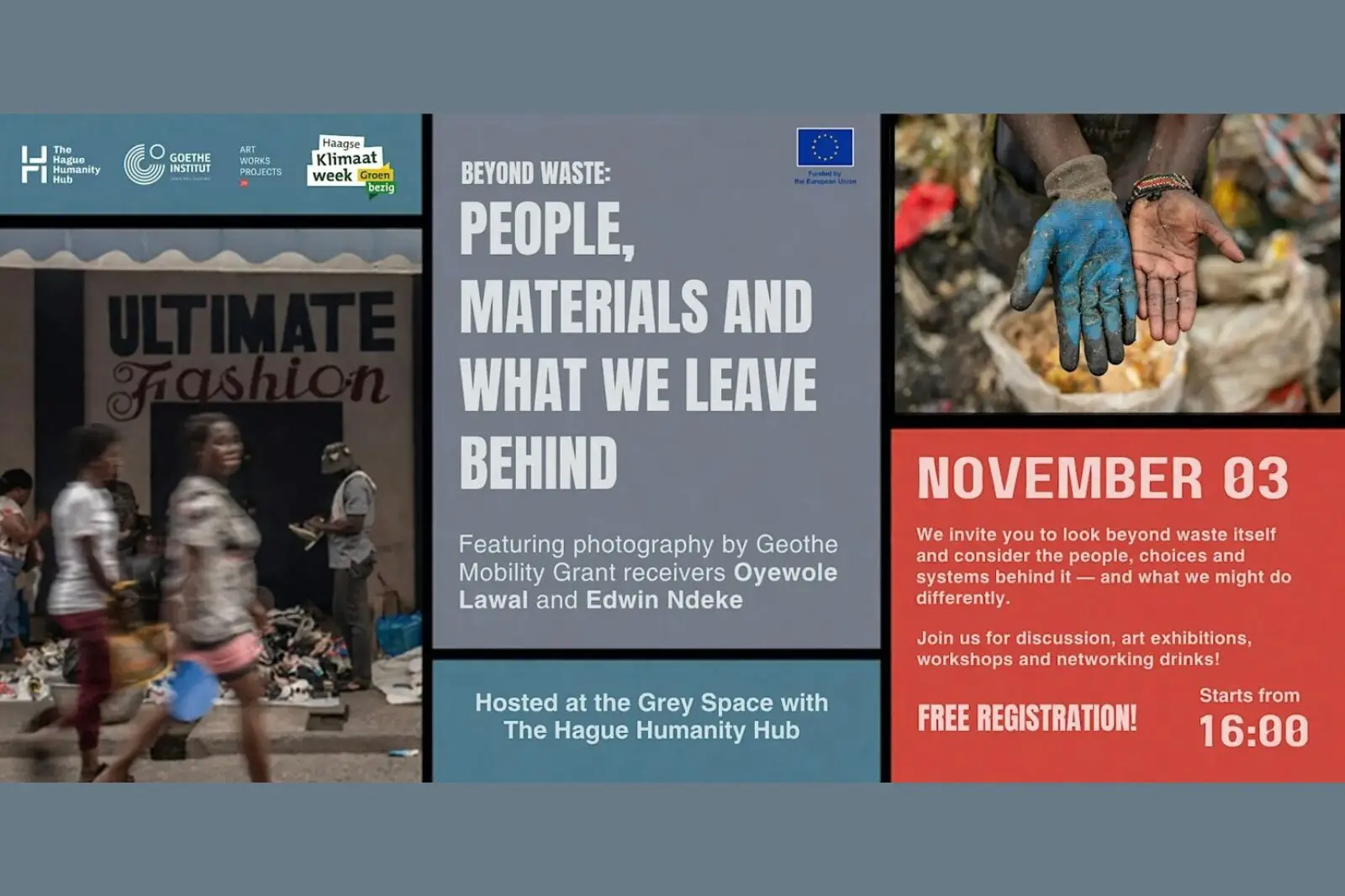
On 3 November, the work of Emerging Lens Fellows Oyewole Lawal and Edwin Ndeke will be presented in a public exhibition and participatory programme at The Grey Space in the Middle, looking more closely at waste, consumption, labour, environmental degradation and the communities dealing with their consequences.
Together, the two events ask how images, lived experience, advocacy and law can reinforce one another in making environmental harm visible—and turning recognition into accountability and action.
About the organisers
The Hague Humanity Hub is a not for profit foundation based in The Hague, the international city of peace and justice and home to hundreds of organisations working towards a better word. We offer an open and inclusive platform for changemakers to connect both locally and internationally, building bridges across themes, sectors, and disciplines.
Art Works Projects (AWP) is a Chicago- and The Hague-based nonprofit that uses visual storytelling, new media and public engagement to confront human rights abuses and social injustice. Working with artists and partners around the world, AWP creates exhibitions, films and public programmes that connect powerful stories with dialogue, advocacy and action.
The Promise Institute for Human Rights at UCLA School of Law is a centre for human rights education, research and advocacy, with locations in Los Angeles and Europe. The Promise Institute Europe advances research and practice in international law and human rights, with a particular focus on their intersection with environmental and planetary justice.
Privacy
By attending this event, you acknowledge that photographs and/or video may be taken for documentation and promotional purposes by The Hague Humanity Hub. If you prefer not to be photographed or recorded, please inform the organisers upon arrival.
Your data is stored securely. You have the right to access, correct, or delete your information at any time. We retain event registration data for up to five years to help us understand participation trends and improve our programming. You can unsubscribe from email updates or opt out of surveys at any time.
For more information, please refer to our full Privacy Policy.
In-person participation for this event is unfortunately sold out, but you can register here to watch the livestream online.
Join online This link opens in a new tabFrom workshops and trainings to large conferences, our modern facilities — including hybrid options and sustainable catering — ensure a smooth experience. We also offer optional support with guest registration, check-in, ticketing, and event communications. Contact our team for a custom, no-obligation quote: