Help shape the Hub’s next chapter
We are evaluating eight years of the Humanity Hub, and we want your perspective. No more than five minutes, open until 23 October.
Take the survey
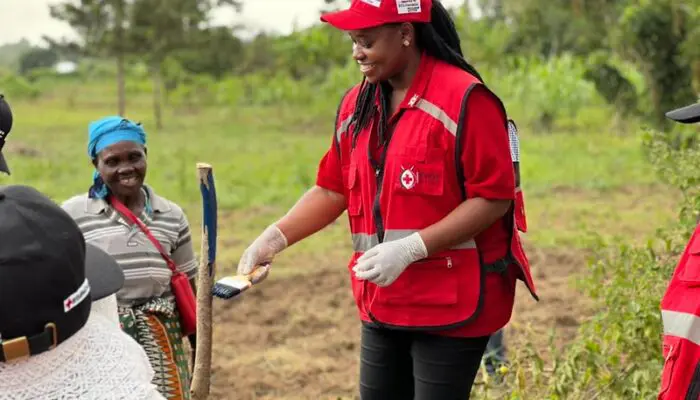
Join us for a masterclass on Anticipatory Action, organised by KUNO, the University of Twente (UT)/ITC, the Hague Humanitarian Studies Centre-ISS, the Netherlands Red Cross, and Vrije Universiteit Amsterdam.
This masterclass aims to raise awareness and build knowledge on the motivations for, as well as on the how of anticipatory action (in more detail). It also seeks to facilitate critical reflection and explore its limitations. Through interactive sessions, participants will acquire a deeper, hands-on understanding of the practice of anticipatory action. The masterclass is designed for humanitarian practitioners, policy makers, academics and students.
Anticipatory action refers to actions taken to reduce the humanitarian impacts of a forecast hazard before it occurs, or before its most acute impacts are felt. The decision to act is based on a forecast, or collective risk analysis, of when, where and how the event will unfold (IFRC 2020). It is a type of preemptive intervention informed by early warnings; for example, distributing cash transfers to farmers ahead of a predicted drought. It has been used to reduce the impacts of crises by triggering early actions before disasters unfold. It is used as an extension of humanitarian aid.
Anticipatory action is gaining increasing attention, also within the humanitarian field, and sees a rise in funding, for example, in the Netherlands and Germany. Anticipatory action started with small pilots in 2016. Since then, over 154 active frameworks have been developed in 48 countries, with at least 285 UN/Red Cross and NGOs involved and several donors.
Time: 13:00-13:45.
Plenary
Welcome and opening by Carla Jonkers, Manager Disaster Preparedness & Response Unit, Netherlands Red Cross.
Presentation on anticipatory action, and on the work the Red Cross does in that context by Marc van Homberg, Professor Data4Disaster Resilience (UT/ITC) and Scientific Lead at 510 Global of the Red Cross & Eefje Hendriks, Assistant Professor of Disaster Resilience and Humanitarian Assistance (UT).
13:45-14:30
Plenary
Round table discussion with 3 humanitarian organisations (tbc) on their anticipatory action work, a case study and challenges on the ground.
14:30 – 15:00
Break
15:00 – 16:15
Breakout groups
Break up into smaller groups for group activities guided by experts, to work towards resolving certain challenges in AA response. These are divided by different themes:
1. Ethics: Who has the power to decide on the trigger mechanisms?
2. Localisation: How can trigger mechanisms be locally defined?
3. Tech vs. Social: How do you balance the technical opportunities to define trigger mechanisms with the need for local participation?
4. Silos: How do you work across silos on anticipatory action?
5. Technical: How can trigger mechanisms be technically optimised?
16:15-17:00
Plenary
Panel conversation with tbc speakers on working across silos/the disaster management phases (preparedness, AA and response) to reflect the reality on the ground.
17:00-18:00
Drinks and Networking
Register here This link opens in a new tab
From workshops and trainings to large conferences, our modern facilities — including hybrid options and sustainable catering — ensure a smooth experience. We also offer optional support with guest registration, check-in, ticketing, and event communications. Contact our team for a custom, no-obligation quote: